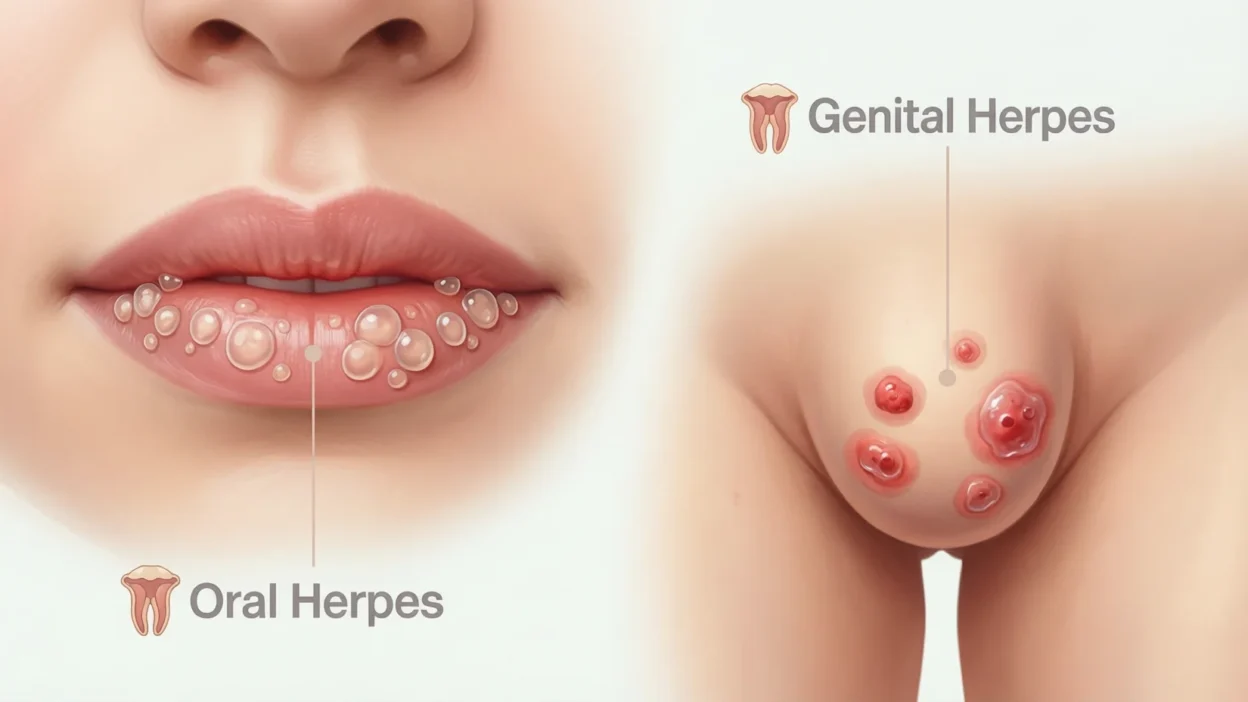
Have you ever noticed a small blister on your lip or genital area and wondered, “What does herpes look like?” You’re not alone — many people see the term herpes online and feel confused or anxious.
Understanding the appearance of herpes is important for early recognition, treatment, and prevention.
Quick Answer:
Herpes is a viral infection caused by the herpes simplex virus (HSV).
It appears as small, fluid-filled blisters or sores on the skin. HSV-1 usually affects the mouth (oral herpes symptoms), while HSV-2 affects the genital area (genital herpes symptoms).
Early recognition helps manage outbreaks and reduces transmission risk.
🧠 What Does Herpes Look Like? | Signs & Symptoms
Herpes symptoms vary depending on the virus type:
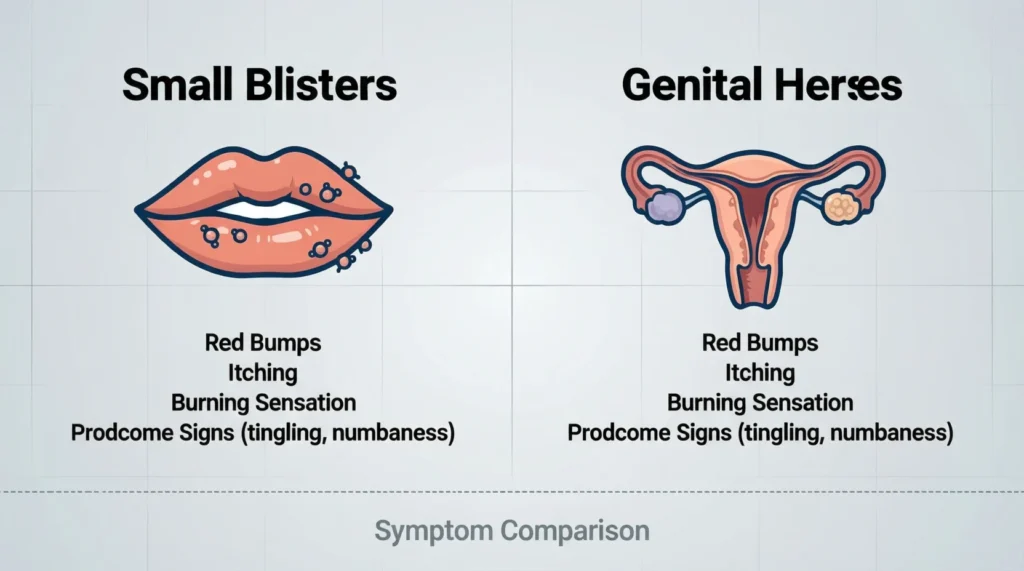
Oral Herpes (HSV-1)
- Small, grouped blisters on lips or around the mouth
- Tingling, itching, or burning before blisters appear (prodrome phase)
- Blisters can break open, leaving painful sores or crusts
- Occasional mild fever or swollen lymph nodes
Genital Herpes (HSV-2)
- Painful bumps or blisters on the genitals, buttocks, or thighs
- Burning sensation during urination
- Tingling or itching before blisters appear
- Flu-like symptoms during first outbreak
Step-by-Step Early Signs of Herpes:
- Tingling, itching, or burning in affected area
- Small red bumps appear
- Bumps develop into fluid-filled blisters
- Blisters break open, forming painful sores
- Sores heal over 7–10 days (without scarring)
In short:
Herpes = HSV virus = Small blisters/sores on lips or genitals = Early herpes symptoms.
⚠️ Visual Tip: Users searching “what does genital herpes look like” or “early herpes symptoms on lips” often expect images. If possible, include labeled diagrams showing HSV-1 vs HSV-2 blisters.
📱 Where Is Herpes Commonly Discussed?
Herpes conversations happen in:
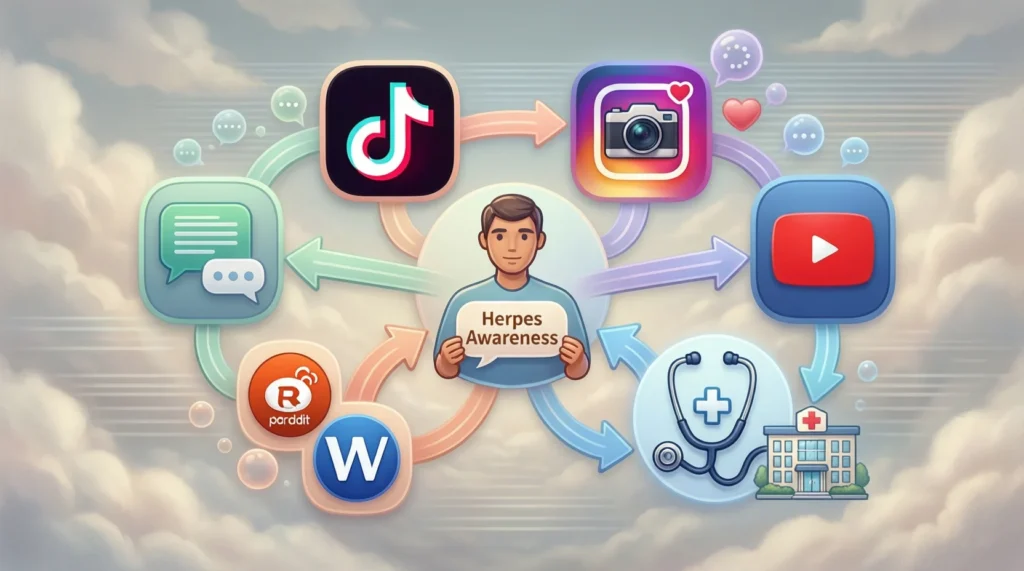
- 💬 Texting & Messaging: Friends or partners sharing personal experiences
- 🧑⚕️ Health Forums: Reddit, Healthline, WebMD (herpes outbreaks, early signs, treatment tips)
- 🎥 Social Media: TikTok, Instagram, YouTube (awareness videos on HSV-1 vs HSV-2)
- 👩⚕️ Medical Contexts: Clinics or telehealth platforms
Tone & Style: Casual and informative in chats; formal and medical in professional discussions.
💬 Examples of How People Talk About Herpes
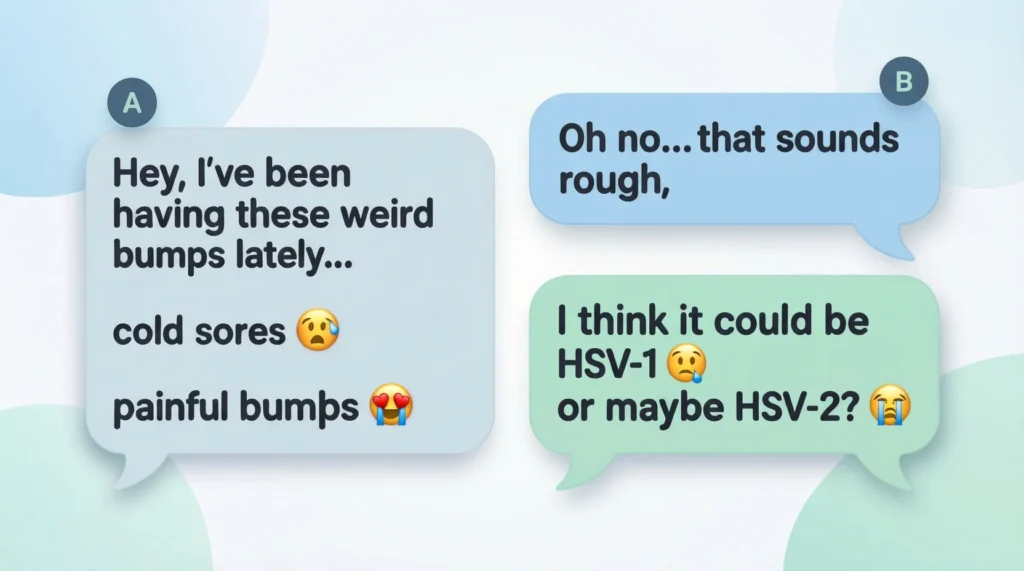
- A: “Hey, small blisters on my lip 😬”
B: “Sounds like HSV-1. Try some antiviral cream.” - A: “Painful bumps down there 😓”
B: “That could be HSV-2. Definitely see a doctor for proper herpes treatment.” - A: “Is this herpes?”
B: “Early herpes symptoms include small clusters of blisters or red bumps.” - A: “Tingling around my lips 😬”
B: “Classic oral herpes symptoms. Blisters may appear soon.” - A: “How contagious is herpes?”
B: “It can spread during herpes outbreaks and even when asymptomatic.”
🕓 When to Use and When Not to Use This Knowledge
✅ When to Use:
- Talking to a doctor about herpes treatment
- Discussing genital herpes symptoms responsibly with a partner
- Online forums for how to identify herpes
- Learning prevention and self-care
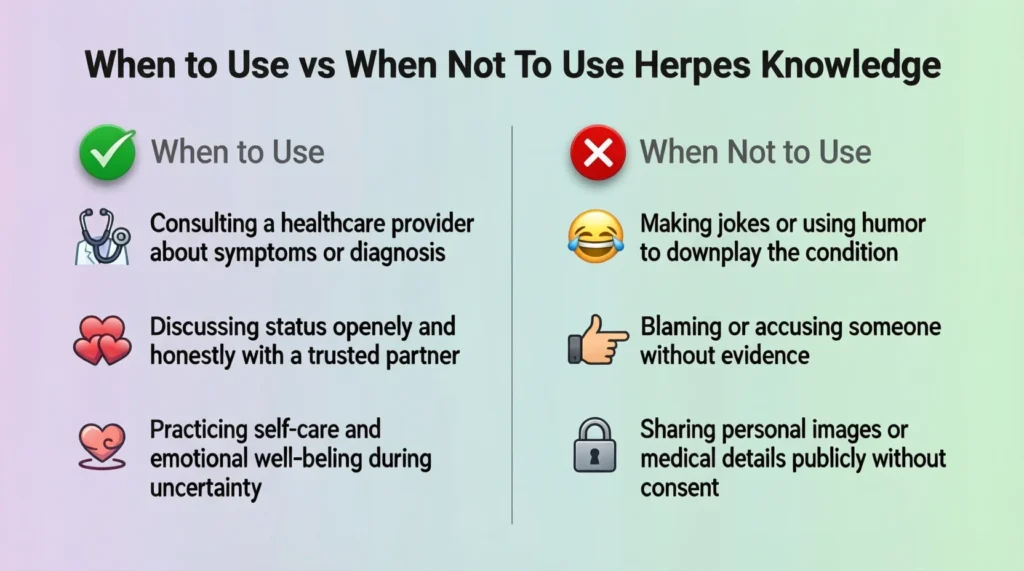
❌ When Not to Use:
- Making jokes or memes in public chats
- Accusing someone without proof
- Sharing graphic images casually
- Ignoring privacy and consent
Comparison Table:
| Context | Example Phrase | Why It Works |
| Friend Chat | “I noticed some cold sores 😬” | Casual & friendly |
| Work Chat | “I’m feeling unwell, might see a doctor” | Polite & professional |
| “I would like to consult about my health concern” | Formal & clear |
💊 Herpes Treatment & Prevention
Treatment Options
- Antiviral medications: Acyclovir, valacyclovir, famciclovir
- Topical creams: For oral herpes symptoms
- Pain relief: Over-the-counter options like ibuprofen
- Lifestyle tips: Avoid triggers (stress, sun, fatigue)
Prevention Tips
- Use condoms or dental dams during sexual activity
- Avoid contact during active outbreaks
- Wash hands thoroughly after touching sores
- Avoid sharing drinks, utensils, or lip products during oral outbreaks
🔄 Similar Terms or Alternatives
| Term | Meaning | When to Use |
| Cold sore | HSV-1 blisters on lips | Casual chats, medical advice |
| Oral herpes | HSV-1 infection | Medical discussions or awareness |
| Genital herpes | HSV-2 infection | Doctor visits, health forums |
| HSV | Herpes simplex virus | Medical/scientific context |
| Herpes bumps | Small, fluid-filled sores | Early detection or self-care |
❓ FAQs About Herpes
Q1: Can herpes be cured?
A: No, but antiviral treatment can reduce outbreaks and transmission risk.
Q2: How do I know if a blister is herpes?
A: Look for small, grouped blisters that itch or burn before appearing. A doctor can confirm.
Q3: Can I spread herpes without symptoms?
A: Yes, asymptomatic shedding can transmit the virus.
Q4: Are cold sores the same as herpes?
A: Yes, they are oral HSV-1 infections.
Q5: How long does an outbreak last?
A: Usually 7–10 days for oral herpes; genital outbreaks vary, especially with treatment.
Conclusion
Knowing what herpes looks like helps with early recognition, treatment, and prevention.
By understanding HSV-1 vs HSV-2, recognizing early herpes symptoms, and following proper prevention tips, you can protect yourself and others.
Remember, herpes is common, manageable, and nothing to be ashamed of — awareness is the first step!


