Have you ever been walking through the woods or tending your garden and suddenly felt an itchy rash appear on your arm? You might have brushed against poison ivy without even realizing it.
If you’ve ever wondered “what does poison ivy look like?”, you’re in the right place! Recognizing it early can save you from poison ivy rash, itching, and swelling.
Quick Answer:
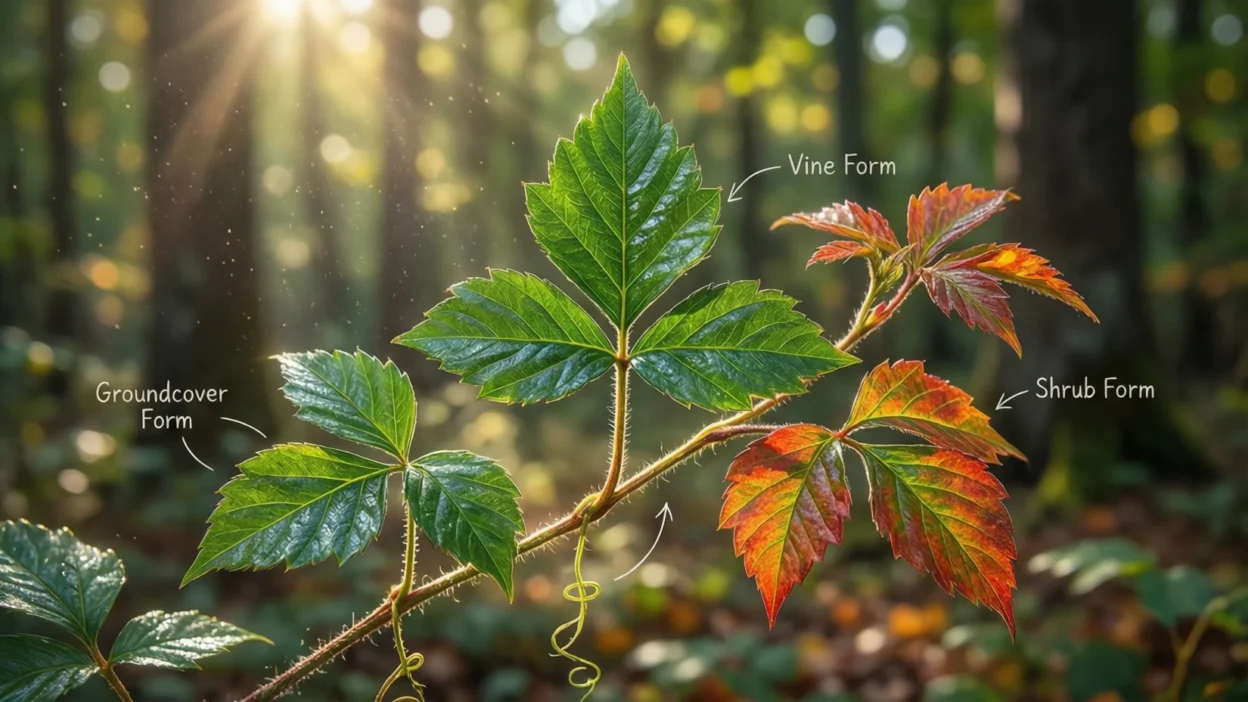
Poison ivy is a plant that causes a red, itchy rash when touched. Its leaves grow in clusters of three, and it can appear as a vine, shrub, or groundcover.
Poison ivy is common in forests, gardens, and urban parks across North America.
What Does Poison Ivy Look Like? 📝
Identifying poison ivy plants is easier when you know the key traits.
Key features:
- Leaves in threes: “Leaves of three, let it be.” Each leaflet is almond-shaped with slightly jagged edges.
- Color: Green in summer, red or orange in fall, and yellowish in spring.
- Growth: Can grow as a vine climbing trees, a shrub, or a low groundcover.
- Texture: Smooth or slightly shiny leaves.
Tip: Look for shiny leaves in clusters of three with pointed tips. If you see this plant, avoid touching it.
Quick Example:
“I brushed against some poison ivy today—three shiny leaves and all! 😬”
In short: Poison Ivy = plant that causes rash = clusters of three leaves.
Where Is Poison Ivy Commonly Found? 🌳
Poison ivy plants grow in a variety of locations:
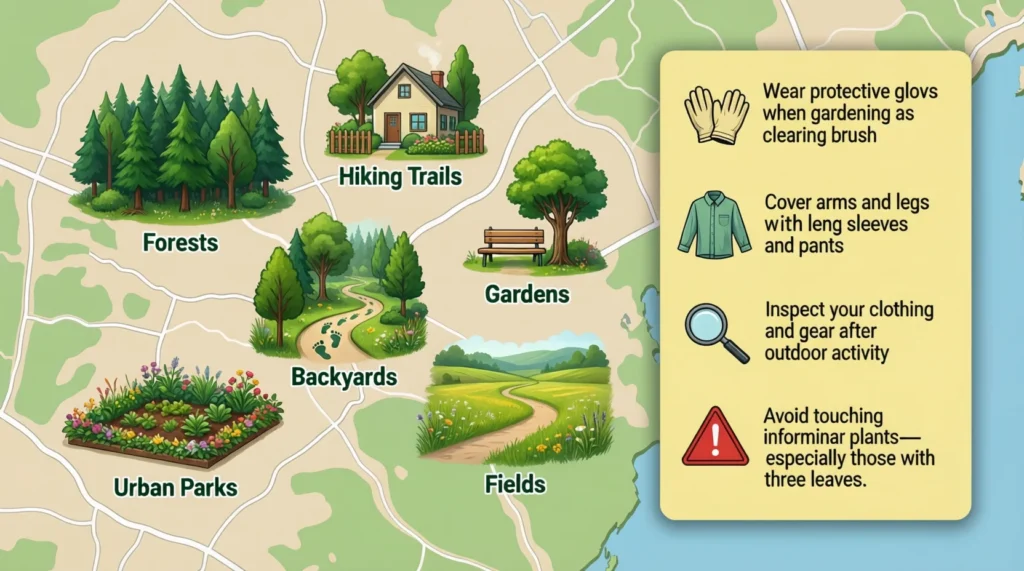
- 🌲 Forests & hiking trails — the most common places to encounter it.
- 🏡 Gardens & backyards — can hide near fences or flower beds.
- 🌳 Urban parks & playgrounds — even in city areas.
- 🌾 Fields & roadside areas — watch for it along paths and open spaces.
Formality: Casual — usually discussed in gardening tips, hiking safety, or nature identification guides.
How to Tell Poison Ivy Apart From Other Plants 🌿
Sometimes poison ivy is confused with similar plants. Here’s a quick guide:
| Plant Name | Leaf Count & Shape | How to Tell the Difference |
| Poison Ivy | 3 leaflets, smooth or slightly shiny | “Leaves of three, let it be” |
| Poison Oak | 3 leaflets, jagged edges | Leaf edges more rounded and hairy |
| Poison Sumac | 7–13 leaflets per stem | Grows as a tall shrub in wet areas |
| Virginia Creeper | 5 leaflets | Has five leaves instead of three |
| Boxelder | 5–7 compound leaves | More tree-like, not shiny or clustered |
Tip: When in doubt, don’t touch the plant. Wearing gloves while gardening is always safer.
Poison Ivy on Skin: Symptoms and Rash 🩹
If contact happens, poison ivy rash usually appears 12–48 hours later. Common signs:
- Red, itchy bumps
- Swelling or blisters
- Linear streaks where the plant brushed the skin
Treatment tips:
- Wash the area immediately with soap and water.
- Apply calamine lotion or hydrocortisone cream to soothe itching.
- Cool compresses and oatmeal baths can also help.
- Avoid scratching to prevent infection.
Sources: CDC, American Academy of Dermatology
When to Watch Out and When to Avoid Poison Ivy ⚠️
✅ When to Pay Attention:
- Hiking in forests or wooded trails
- Gardening or yard work
- Playing in fields or parks
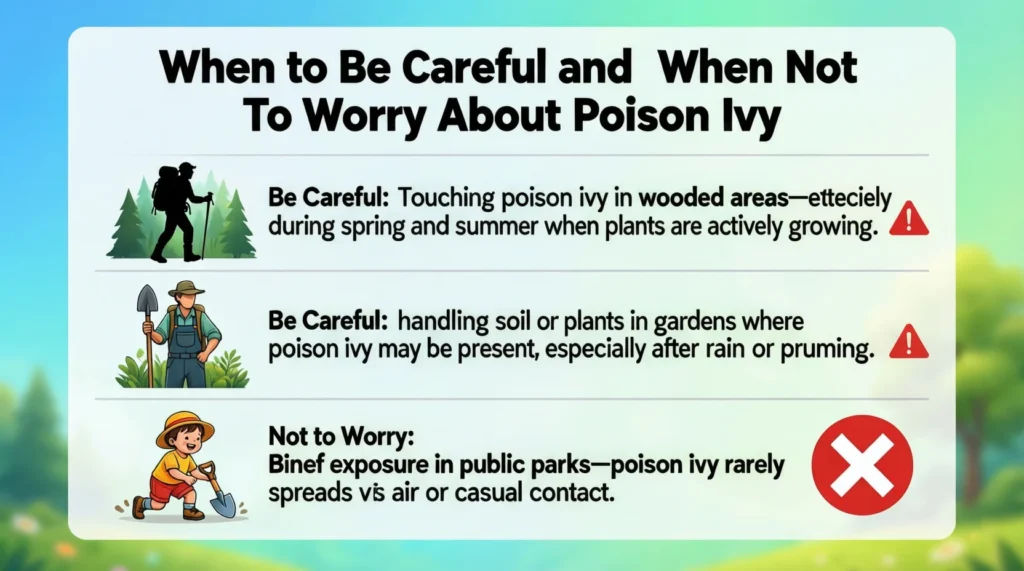
❌ When Not to Worry:
- Observing poison ivy from a safe distance
- During winter when leaves have fallen
Comparison Table:
| Context | Example Phrase | Why It Works |
| Friend Chat | “Omg I brushed against poison ivy 😬” | Casual & friendly |
| Family Chat | “Be careful in the garden, there’s poison ivy” | Informative & caring |
| Hiking Group Chat | “Watch out for poison ivy along the trail!” | Helpful & casual |
| School/Work Chat | “Stay clear of that patch, could irritate skin” | Professional & clear |
FAQs About Poison Ivy ❓
Q1: Can poison ivy grow anywhere?
A: Mostly in North America, especially in forests, fields, gardens, and urban parks.
Q2: How fast does poison ivy rash appear?
A: Typically within 12–48 hours after contact.
Q3: How do I prevent poison ivy rash?
A: Wear long sleeves, pants, and gloves. Wash skin immediately if you touch the plant.
Q4: Is poison ivy dangerous?
A: Mostly irritating, but severe allergic reactions are rare.
Q5: How do I treat poison ivy rash?
A: Use cool compresses, calamine lotion, oatmeal baths, and avoid scratching.
Q6: How to tell poison ivy from poison oak?
A: Poison ivy has 3 shiny leaves, while poison oak has rounder, hairier leaves.
Q7: Are there poison ivy pictures for reference?
A: Yes! Many reliable sources, including the CDC and American Academy of Dermatology, provide clear pictures to help identify poison ivy safely.