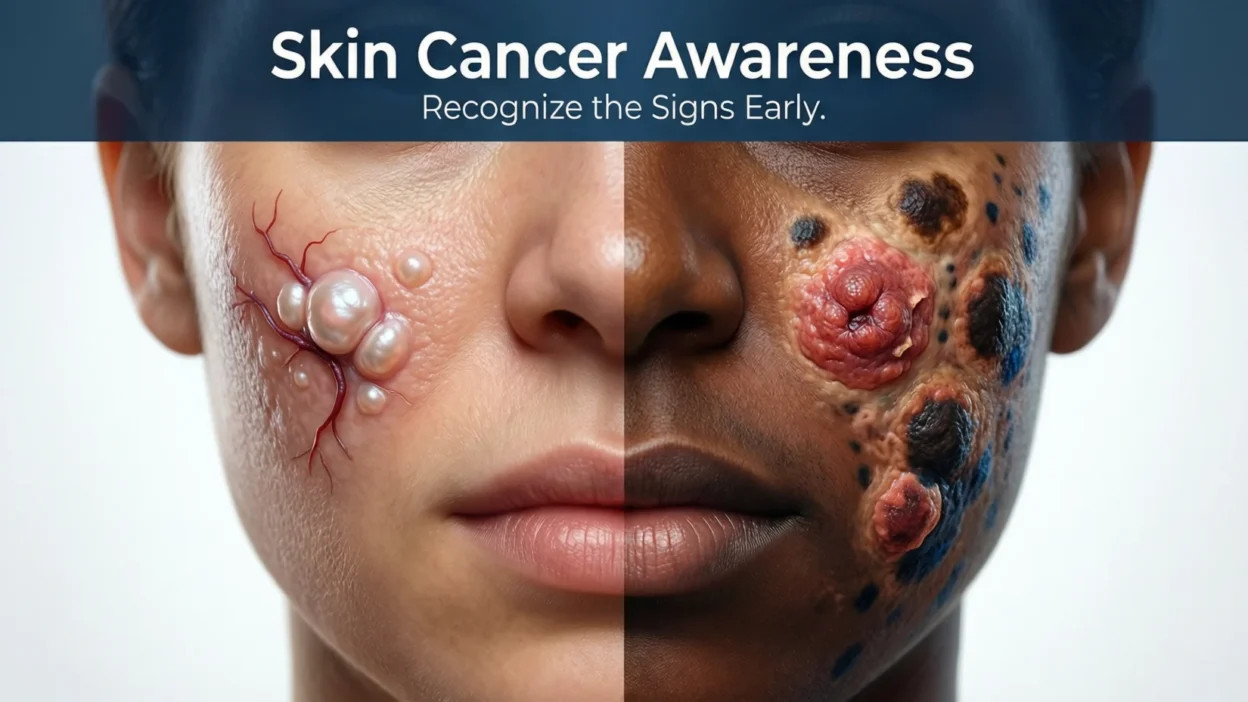
Have you ever noticed a spot, bump, or mole on your skin and wondered, “Could this be skin cancer?” It’s normal to feel worried. Understanding what does skin cancer look like can help you detect early warning signs and act quickly.
Skin cancer can appear in different forms, from small shiny bumps to irregular moles, and spotting it early can make a big difference.
This guide will show you the common signs and symptoms of skin cancer, including visual descriptions for all skin tones.
Quick Answer:
Skin cancer is an abnormal growth of skin cells. It usually appears as unusual moles, spots, bumps, or sores. Early detection is crucial, and recognizing the warning signs can save lives.
🧠 What Does Skin Cancer Look Like?
Skin cancer can appear in several ways depending on the type. The three most common are Basal Cell Carcinoma (BCC), Squamous Cell Carcinoma (SCC), and Melanoma.
1. Basal Cell Carcinoma (BCC)
- Appearance: Pearly, waxy bumps or flat, flesh-colored patches.
- Common locations: Face, ears, neck, and arms.
- Signs: May bleed easily or not heal over time.
Visual Tip: Consider adding a close-up illustration of a pearly bump on the forehead.
2. Squamous Cell Carcinoma (SCC)
- Appearance: Red, scaly patch or firm bump.
- Common locations: Scalp, hands, ears, and lower legs.
- Signs: May crust or bleed and grow slowly.
Visual Tip: Include an image showing a red scaly patch on the arm or scalp.
3. Melanoma
- Appearance: New moles or existing moles that change in size, shape, or color.
- Warning Signs: Use the ABCDE method:
- A – Asymmetry: One half does not match the other
- B – Border: Irregular, jagged edges
- C – Color: Uneven shades (brown, black, red, blue, or white)
- D – Diameter: Larger than 6mm (pencil eraser)
- E – Evolving: Changes over time
- A – Asymmetry: One half does not match the other
Visual Tip: Add an illustration showing mole differences in light and dark skin for better inclusivity.
In short: Skin cancer = abnormal skin growth = unusual bumps, spots, or moles that change over time.
📱 Where Is Skin Cancer Commonly Found?
Skin cancer can appear anywhere, but it’s most common on sun-exposed areas:
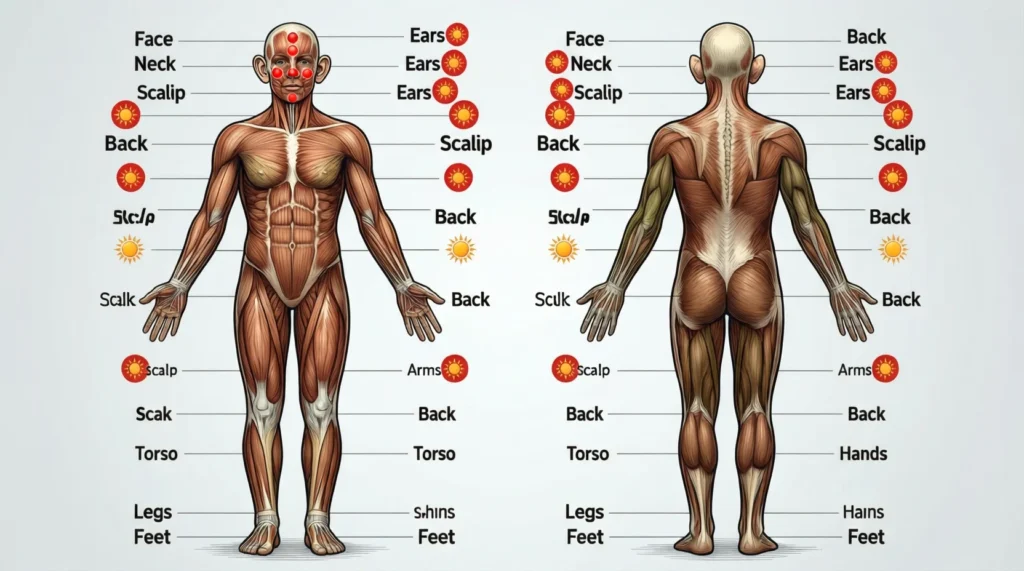
- 🌞 Face, neck, ears
- ☀️ Arms & hands
- 🦶 Feet and legs
- 👀 Scalp (especially with thinning hair)
- 🔄 Back and torso (hidden spots for melanoma)
Note: Skin cancer looks different on lighter vs. darker skin tones. On darker skin, warning signs can include darker patches, unusual moles, or dark streaks under nails.
Formality: Detecting skin cancer is a serious medical concern, not casual or humorous.
💬 Examples of How Skin Cancer Might Appear
Here are some realistic visual scenarios:
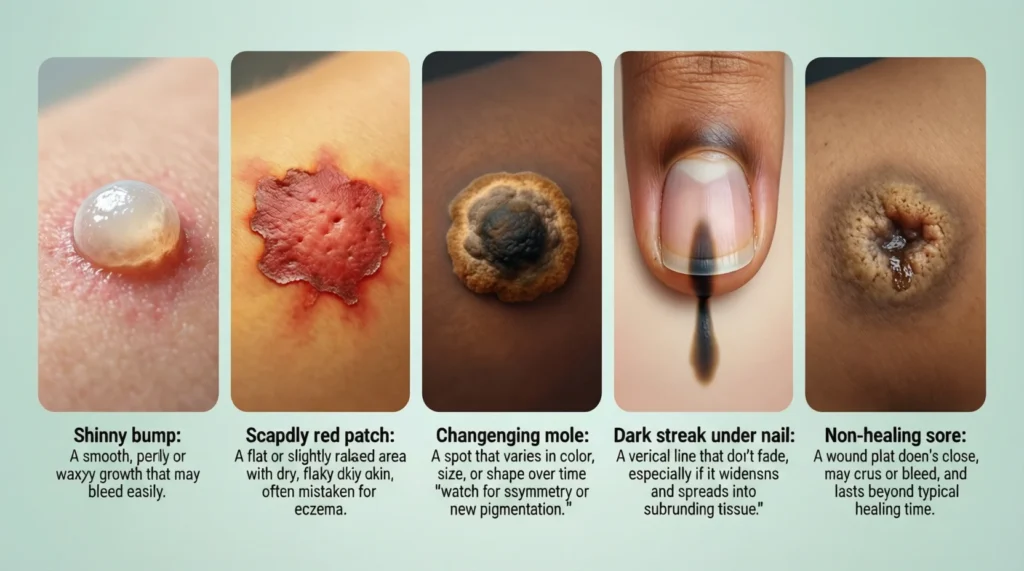
- New shiny bump: Small pearly bump on your nose that doesn’t heal.
- Scaly red patch: Flaky patch on forearm that bleeds easily.
- Changing mole: Mole on the back getting darker or uneven.
- Dark streak under a nail: Vertical black line beneath a fingernail or toenail.
- Non-healing sore: Sore on lower lip lasting for weeks.
🕓 When to Check and When to Seek Help
✅ When to Check:
- New spot, bump, or mole appearing suddenly.
- Existing mole changes in color, size, or shape.
- Sores that do not heal.
- Family history of skin cancer or frequent sun exposure.
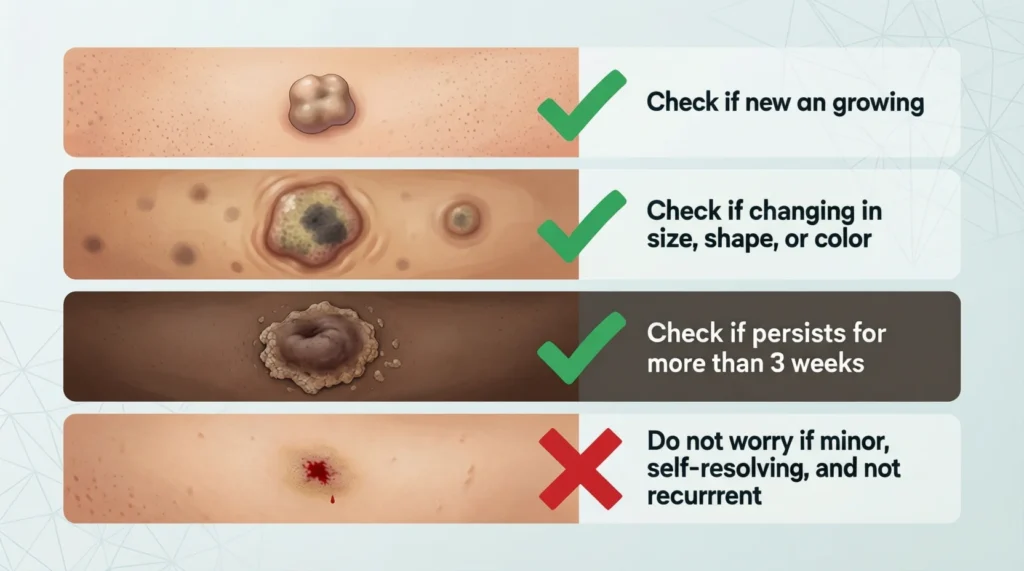
❌ When Not to Worry:
- Normal moles that haven’t changed.
- Temporary rashes or bug bites that heal naturally.
- Irritation from shaving, friction, or cosmetic products.
Comparison Table:
| Context | Example Observation | Why It Matters |
| Self-check at home | New mole on arm | Early detection improves outcomes |
| Doctor visit | Changing mole or non-healing sore | Professional diagnosis & treatment |
| Casual observation | Freckles or birthmarks | Usually harmless |
🔄 Similar Conditions or Look-Alikes
Some harmless conditions can mimic skin cancer:
| Condition | Appearance | When to Consider Medical Check |
| Mole (nevus) | Small, uniform color | If it changes over time |
| Freckle | Small, brown spot | Monitor for changes |
| Actinic Keratosis | Rough, scaly patch | Pre-cancerous; dermatologist review |
| Seborrheic Keratosis | Waxy, stuck-on patch | Check if changing |
| Skin infection | Red, inflamed, sometimes pus | Persistent or spreading requires attention |
❓ FAQs About “What Does Skin Cancer Look Like?”
Q1: Can skin cancer appear anywhere on the body?
Yes. It’s most common on sun-exposed areas, but melanoma can appear on hidden spots like the back or soles of feet.
Q2: How fast does skin cancer grow?
BCC grows slowly, SCC moderately, and melanoma can spread quickly. Early detection is critical.
Q3: Is every mole dangerous?
No. Most moles are harmless. Watch for changes in size, shape, or color.
Q4: What should I do if I suspect skin cancer?
See a dermatologist immediately. Early detection improves treatment outcomes.
Q5: Can skin cancer be prevented?
Yes. Protect your skin from the sun, use SPF, avoid tanning beds, and check your skin regularly.
✅ Conclusion
Recognizing what skin cancer looks like is essential for protecting your health.
Look for new bumps, patches, or changing moles, and see a doctor if anything seems unusual.
Skin cancer is often treatable when caught early, making awareness and self-checks your first line of defense.


