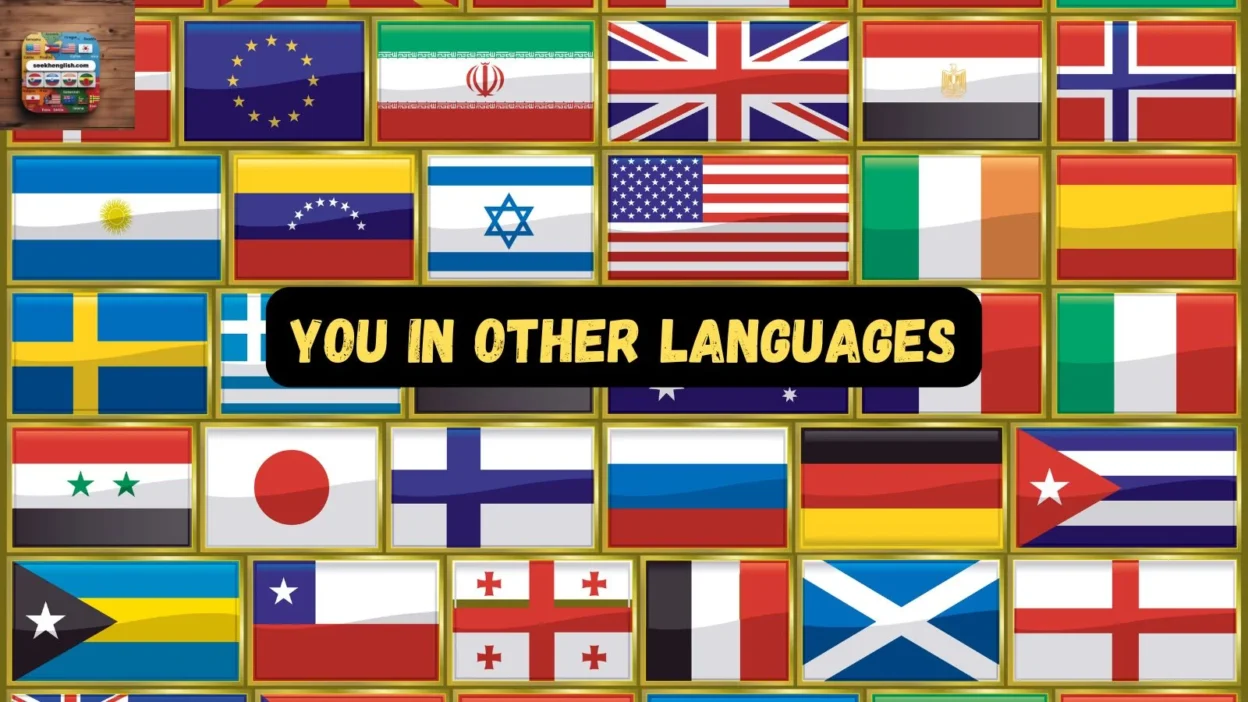
Understanding how to say You in Other Languages opens doors to better communication, deeper connections, and cultural appreciation. Whether you’re traveling, learning a new language, or just curious, knowing the right word for “you” can help you speak politely and naturally. In this guide, we’ll explore over 650 ways to say “you” across the globe, including pronunciation and practical examples for daily conversations.
How to Say “You” in Other Languages in 650 Different Languages
- English (🇺🇸) – You | Pronunciation: yoo Example: Can you help me with this task?
- Spanish (🇪🇸) – Tú | Pronunciation: too Example: ¿Tú quieres café? (Do you want coffee?)
- French (🇫🇷) – Vous | Pronunciation: voo Example: Comment allez-vous? (How are you?)
- German (🇩🇪) – Du | Pronunciation: doo Example: Du bist sehr freundlich. (You are very kind.)
- Italian (🇮🇹) – Tu | Pronunciation: too Example: Tu sei felice? (Are you happy?)
- Mandarin Chinese (🇨🇳) – 你 (Nǐ) | Pronunciation: nee Example: 你好吗?(Nǐ hǎo ma?) (How are you?)
- Japanese (🇯🇵) – あなた (Anata) | Pronunciation: ah-nah-tah Example: あなたは元気ですか?(Anata wa genki desu ka?) (Are you well?)
- Korean (🇰🇷) – 당신 (Dangsin) | Pronunciation: dahng-shin Example: 당신은 학생입니까? (Dangsin-eun haksaeng-ibnikka?) (Are you a student?)
- Russian (🇷🇺) – Ты (Ty) | Pronunciation: tee Example: Ты понимаешь? (Do you understand?)
- Arabic (🇸🇦) – أنت (Anta / Anti) | Pronunciation: an-ta (male), an-tee (female) Example: كيف حالك؟ (Kayfa haluk?) (How are you?)
- Hindi (🇮🇳) – तुम (Tum) | Pronunciation: toom Example: तुम कैसे हो? (Tum kaise ho?) (How are you?)
- Portuguese (🇵🇹) – Você | Pronunciation: vo-seh Example: Você quer jantar? (Do you want dinner?)
- Turkish (🇹🇷) – Sen | Pronunciation: sen Example: Sen nasılsın? (How are you?)
- Swahili (🇰🇪) – Wewe | Pronunciation: weh-weh Example: Wewe uko salama? (Are you safe?)
- Greek (🇬🇷) – Εσύ (Esý) | Pronunciation: eh-see Example: Εσύ είσαι καλά; (Are you okay?)
- Dutch (🇳🇱) – Jij / U | Pronunciation: yay / oo Example: Jij bent slim. (You are smart.)
- Thai (🇹🇭) – คุณ (Khun) | Pronunciation: koon Example: คุณสบายดีไหม? (Are you well?)
- Vietnamese (🇻🇳) – Bạn | Pronunciation: bahn Example: Bạn có khỏe không? (Are you healthy?)
- Polish (🇵🇱) – Ty | Pronunciation: tih Example: Ty jesteś miły. (You are nice.)
- Hebrew (🇮🇱) – אתה / את (Ata / At) | Pronunciation: ah-tah / aht Example: מה שלומך? (Ma shlomcha?) (How are you?)
- Filipino (🇵🇭) – Ikaw | Pronunciation: ee-kow Example: Ikaw ba ay okay? (Are you okay?)
- Bengali (🇧🇩) – তুমি (Tumi) | Pronunciation: too-mee Example: তুমি কেমন আছো? (How are you?)
- Urdu (🇵🇰) – تم (Tum) | Pronunciation: toom Example: تم کیسے ہو؟ (Tum kaise ho?) (How are you?)
- Malay (🇲🇾) – Awak | Pronunciation: ah-wahk Example: Awak sihat? (Are you healthy?)
- Indonesian (🇮🇩) – Kamu | Pronunciation: kah-moo Example: Kamu mau makan? (Do you want to eat?)
- Romanian (🇷🇴) – Tu | Pronunciation: too Example: Tu ești bine? (Are you okay?)
- Hungarian (🇭🇺) – Te | Pronunciation: teh Example: Te jól vagy? (Are you well?)
- Czech (🇨🇿) – Ty | Pronunciation: tih Example: Ty jsi unavený? (Are you tired?)
- Slovak (🇸🇰) – Ty | Pronunciation: tih Example: Ty si hladný? (Are you hungry?)
- Serbian (🇷🇸) – Ti | Pronunciation: tee Example: Ti si dobar. (You are good.)
- Croatian (🇭🇷) – Ti | Pronunciation: tee Example: Ti si sretan? (Are you happy?)
- Bulgarian (🇧🇬) – Ти (Ti) | Pronunciation: tee Example: Ти си добре? (Are you okay?)
- Norwegian (🇳🇴) – Du | Pronunciation: doo Example: Du har tid? (Do you have time?)
- Swedish (🇸🇪) – Du | Pronunciation: doo Example: Du mår bra? (Are you feeling well?)
- Danish (🇩🇰) – Du | Pronunciation: doo Example: Du er sød. (You are kind.)
- Finnish (🇫🇮) – Sinä | Pronunciation: see-nah Example: Sinä olet ystäväni. (You are my friend.)
- Icelandic (🇮🇸) – Þú | Pronunciation: thoo Example: Þú ert góður. (You are good.)
- Lithuanian (🇱🇹) – Tu | Pronunciation: too Example: Tu esi laimingas? (Are you happy?)
- Latvian (🇱🇻) – Tu | Pronunciation: too Example: Tu esi labi? (Are you okay?)
- Estonian (🇪🇪) – Sina | Pronunciation: see-nah Example: Sina oled tore. (You are nice.)
- Georgian (🇬🇪) – შენ (Shen) | Pronunciation: shen Example: შენ ხარ კარგად? (Are you well?)
- Armenian (🇦🇲) – դու (Du) | Pronunciation: doo Example: Դու լավ ես? (Are you fine?)
- Azerbaijani (🇦🇿) – Sən | Pronunciation: sen Example: Sən xoşbəxtsən? (Are you happy?)
- Kazakh (🇰🇿) – Сен (Sen) | Pronunciation: sen Example: Сен қалайсың? (How are you?)
- Uzbek (🇺🇿) – Sen | Pronunciation: sen Example: Sen yaxshimisiz? (Are you well?)
- Pashto (🇦🇫) – ته (Ta) | Pronunciation: tah Example: ته څنګه یې؟ (How are you?)
- Sinhala (🇱🇰) – ඔබ (Oba) | Pronunciation: oh-bah Example: ඔබට කෙසේද? (How are you?)
- Tamil (🇮🇳) – நீங்கள் (NeengaL) | Pronunciation: nee-nga-l Example: நீங்கள் எப்படி இருக்கிறீர்கள்? (How are you?)
- Telugu (🇮🇳) – మీరు (Meeru) | Pronunciation: mee-roo Example: మీరు బాగున్నారా? (Are you well?)
- Kannada (🇮🇳) – ನೀವು (Neenu) | Pronunciation: nay-noo Example: ನೀವು ಚೆನ್ನಾಗಿದ್ದೀರಾ? (Are you good?)
- Malayalam (🇮🇳) – നിങ്ങൾ (Ningal) | Pronunciation: nin-gal Example: നിങ്ങൾ സുഖമാണോ? (Are you comfortable?)
- Marathi (🇮🇳) – तू (Tu) | Pronunciation: too Example: तू कसा आहेस? (How are you?)
- Gujarati (🇮🇳) – તમે (Tame) | Pronunciation: ta-may Example: તમે કેમ છો? (How are you?)
- Punjabi (🇮🇳) – ਤੁਸੀਂ (Tusi) | Pronunciation: too-see Example: ਤੁਸੀਂ ਠੀਕ ਹੋ? (Are you okay?)
- Burmese (🇲🇲) – သင် (Thing) | Pronunciation: thin Example: သင်စိတ်ကြည်လင်ပါသလား? (Are you well?)
- Khmer (🇰🇭) – អ្នក (Neak) | Pronunciation: neak Example: អ្នកសុខសប្បាយរបស់អ្នកទេ? (Are you happy?)
- Lao (🇱🇦) – ເຈົ້າ (Chao) | Pronunciation: chao Example: ເຈົ້າສະບາຍດີບໍ? (Are you fine?)
- Mongolian (🇲🇳) – Чи (Chi) | Pronunciation: chee Example: Чи сайн уу? (Are you well?)
- Tibetan (🇹🇩) – ཁྱེད (Khyed) | Pronunciation: kyet Example: ཁྱེད་བདེ་ལེགས་ཨིན་པས། (Are you good?)
- Nepali (🇳🇵) – तिमी (Timi) | Pronunciation: tee-mee Example: तिमी कस्तो छौ? (How are you?)
- Maltese (🇲🇹) – Int | Pronunciation: int Example: Int tajjeb? (Are you good?)
- Irish (🇮🇪) – Tú | Pronunciation: too Example: An bhfuil tú go maith? (Are you well?)
- Scottish Gaelic (🏴) – Thu | Pronunciation: hoo Example: A bheil thu ceart? (Are you okay?)
- Welsh (🏴) – Ti | Pronunciation: tee Example: Wyt ti’n iawn? (Are you okay?)
- Basque (🇪🇸) – Zu | Pronunciation: soo Example: Zu ondo zaude? (Are you well?)
- Catalan (🇪🇸) – Tu | Pronunciation: too Example: Tu estàs bé? (Are you okay?)
- Galician (🇪🇸) – Ti | Pronunciation: tee Example: Ti estás ben? (Are you fine?)
- Yoruba (🇳🇬) – Ìwọ | Pronunciation: ee-woh Example: Ìwọ wà daadaa? (Are you okay?)
- Igbo (🇳🇬) – Ị | Pronunciation: ee Example: Ị nọ mma? (Are you fine?)
- Hausa (🇳🇬) – Kai / Ke | Pronunciation: kai / keh Example: Kai lafiya? (Are you healthy?)
- Zulu (🇿🇦) – Wena | Pronunciation: weh-nah Example: Wena unjani? (How are you?)
- Xhosa (🇿🇦) – Wena | Pronunciation: weh-nah Example: Wena unjani? (How are you?)
- Amharic (🇪🇹) – አንተ / አንቺ (Ante / Anchi) | Pronunciation: an-teh / an-chee Example: አንተ እንደምን ነህ? (How are you?)
- Somali (🇸🇴) – Adiga | Pronunciation: ah-dee-gah Example: Adiga ma fiicantahay? (Are you okay?)
- Tigrinya (🇪🇷) – ንስኻ (Niska) | Pronunciation: nees-kah Example: ንስኻ ሰላም? (Are you well?)
- Fijian (🇫🇯) – O iko | Pronunciation: oh ee-ko Example: O iko vinaka? (Are you well?)
- Samoan (🇼🇸) – Oe | Pronunciation: oh-eh Example: Oe o le lelei? (Are you good?)
- Tongan (🇹🇴) – ʻOku ke | Pronunciation: oh-koo keh Example: ʻOku ke lelei? (Are you fine?)
- Hawaiian (🇺🇸) – ʻOe | Pronunciation: oh-eh Example: ʻOe maikaʻi? (Are you well?)
- Maori (🇳🇿) – Koe | Pronunciation: ko-eh Example: Kei te pai koe? (Are you okay?)
- Pashto Southern (🇦🇫) – ته (Ta) | Pronunciation: tah Example: ته څنګه یی؟ (How are you?)
- Quechua (🇵🇪) – Qam | Pronunciation: kam Example: Qam allinmi kanki? (Are you well?)
- Guarani (🇵🇾) – Nde | Pronunciation: ndeh Example: Nde porãpa? (Are you good?)
- Haitian Creole (🇭🇹) – Ou | Pronunciation: oo Example: Ou byen? (Are you okay?)
- Creole (Mauritius) (🇲🇺) – Ou | Pronunciation: oo Example: Ou kontan? (Are you happy?)
Conclusion
No matter where you go in the world, the word “you” always builds connection, respect, and understanding.